Bryce Canyon is famous for its hoodoos, the tall and irregular rock spires that fill the amphitheater-like landscape. They were formed over a very long period by frost weathering, erosion and water slowly breaking apart the plateau into narrow fins, windows and towers.
What makes Bryce especially unusual is that the landscape looks almost artificial at first glance. The density of the hoodoos, the layered walls and the repeated vertical forms can feel more like an enormous stone theater set than a normal canyon. That is one reason the park stays so memorable even for people who have already seen many famous U.S. national parks.
The geological process behind the scenery is slow but very effective. Water enters cracks in the rock, freezes, expands and keeps widening the stone over many cycles. Over time this frost action, together with erosion, isolates thinner sections and gradually sculpts the strange towers, fins and windows that make Bryce Canyon so recognizable.
The strong red, orange and rusty tones come mainly from iron-rich minerals in the rock. When these minerals oxidize, they create the warm colors that make Bryce Canyon look especially dramatic at sunrise, sunset and after changing weather. Lighter bands and paler sections come from other mineral components, which is why the whole amphitheater has more variation than just one flat red tone.
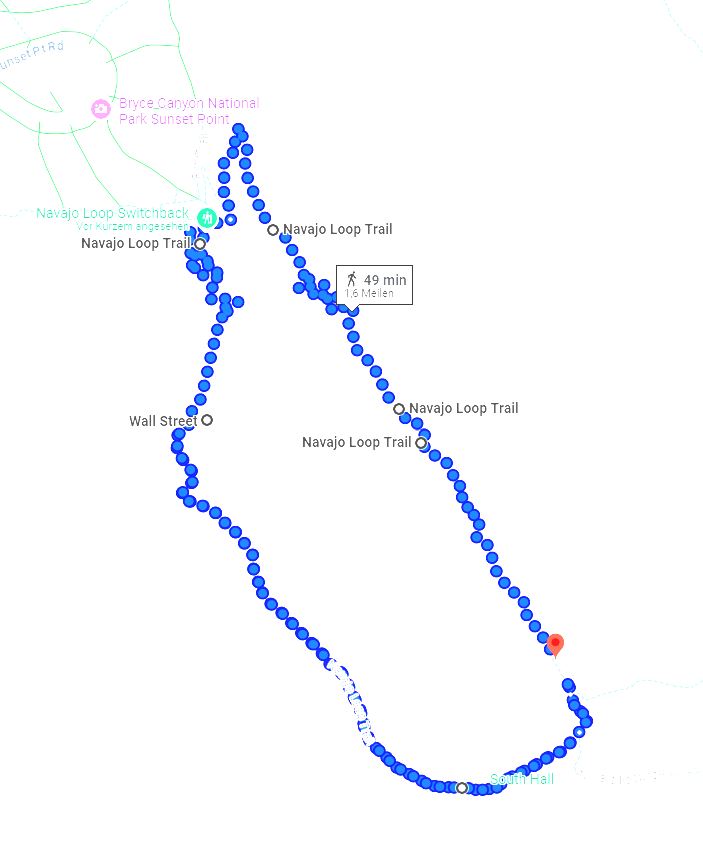
The Navajo Loop is one of the most popular hikes because it takes you directly down into the hoodoos instead of only looking from the rim. That change in perspective matters a lot: from above, the formations look dense and patterned, but from within the trail you start to feel their height, texture and scale much more clearly.
It is not an extreme trail, but it is more demanding than it first appears, especially on hot days and on the climb back up. If you are reasonably fit and carry enough water, it is one of the best ways to understand why Bryce Canyon looks so unique. For many visitors, the combination of rim views and one proper descent into the amphitheater is the best balance between effort and reward.